
400 Windows. 12 Frame Styles. One Installation Deadline. Zero Room for Delay.
A residential subdivision delivery and a curtain wall glazing contract for a 40-storey tower have exactly one thing in common: the general contractor will not wait. Whether you're managing high-volume residential runs across multiple lines or sequencing complex commercial IGU assemblies against a construction punch list, production delays don't just cost you time - they cost you the contract, the relationship, and the repeat business.
Seradex Production Scheduling & Tracking gives your operations team a single, real-time command centre to plan every work order, allocate every resource, and monitor every production stage - from extrusion and glass cutting through assembly, finishing, and dispatch - before a missed milestone becomes a missed deadline.
When Scheduling Lives in a Spreadsheet, the Floor Pays the Price
It starts with a whiteboard. Then a shared spreadsheet. Then a spreadsheet that only one person knows how to read. Meanwhile, your glass cutting line is waiting on a frame batch that finished two hours ago - because nobody updated the board. Your commercial glazing order is being pushed back to accommodate a residential rush that sales booked without checking capacity.
Seradex replaces reactive, manual scheduling with a connected production intelligence system - where every work order, every machine, every operator, and every material is tracked in real time, and every team is always working from the same live picture of the shop floor.
Typical outcomes include higher on-time delivery through conflict detection before delays cascade, less idle time from optimized resource allocation, and visibility across multi-line and multi-facility operations without reconciling separate boards or files.
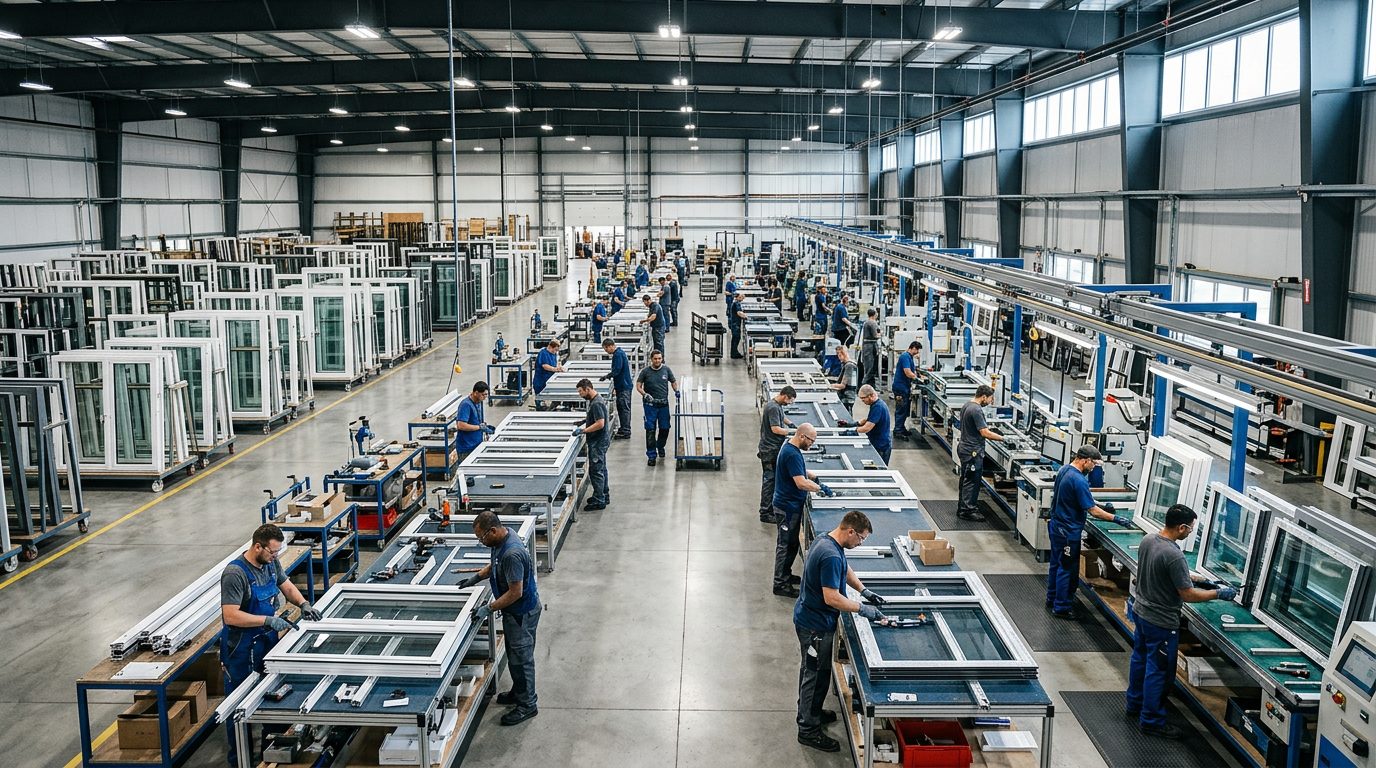
Key Features: Built for the Complexity of Fenestration Production
Visual Gantt-style production scheduling
See your entire production calendar - residential runs, commercial IGU batches, custom architectural orders - on one visual timeline. Re-sequence jobs, balance machine loads, and resolve conflicts before they hit the floor.
Real-time work order tracking
Know exactly where every job is at every moment - cutting, edging, spacer assembly, gas fill, glazing, frame assembly, quality check, staging - so supervisors can act before downstream stations are starved.
Resource allocation & conflict detection
Assign labour, equipment, and materials to each production stage and surface double-booked machines, conflicting shifts, and material shortfalls while there is still time to adjust.
Alerts & proactive notifications
Automated alerts when a job slips, a machine goes down, or a material shortage threatens a critical batch - especially important when installation crews are already mobilized on-site.
Multi-line & multi-facility scheduling
Consolidated visibility across every line and location for capacity, throughput, and delivery readiness.
Reporting & schedule adherence analytics
Planned vs. actual by line, shift, work order, and product type - turn scheduling data into a continuous improvement loop.
Case Studies: Success in Action
Real Results for Window and Glazing Operations Like Yours
Case Study 1:
Residential window manufacturer
Whiteboards and spreadsheets had driven on-time delivery to 72%. Real-time work order tracking and conflict detection helped supervisors catch delays before they cascaded. On-time delivery improved to 94% within the first production quarter.
Case Study 2:
Commercial glazing contractor
Poor sequencing of IGU fabrication and frame assembly drove overtime. Scheduling aligned both stages to site delivery windows. Idle time dropped by 25% and overtime fell significantly within six months.
Case Study 3:
Multi-location manufacturer
Centralized scheduling visibility let planners redistribute capacity between plants when one site was overloaded, reducing cross-site coordination delays and stabilizing commitments across market segments.
How Production Scheduling Connects to Your Seradex Modules
- Material planning & procurement — Schedules reflect material availability; shortfalls surface before they stall production.
- Inventory - Glass, spacers, hardware, and sealant levels sit in the same plan as the floor.
- Work orders - Every scheduled job links to a live work order with full production history.
- Job costing - Labour and machine time feed job cost reporting as work progresses.
- Quality - Inspection checkpoints are embedded in the sequence, not bolted on at the end.
- Shipping & dispatch Final milestones connect to delivery and outbound logistics.
Frequently Asked Questions
Answers to common questions to help you better understand our solutions and processes.
Can Seradex handle both residential volume and complex commercial scheduling?
Yes. Continuous residential runs and multi-phase commercial programs run in one unified system with different sequences and delivery rules as needed.
How are urgent rush orders handled?
Real-time conflict detection shows which existing jobs are affected when a priority order is inserted so planners can re-sequence, shift capacity, or reset customer expectations with full visibility.
Do schedules update as work orders progress?
Yes. Completion and floor updates flow through automatically so downstream stations and delivery commitments stay accurate without manual re-entry.
Does the system support multiple lines, shifts, and facilities?
Yes. Multi-line, multi-shift, and multi-facility scheduling with consolidated dashboards for operations leadership.
How does this fit with the rest of Seradex ERP?
Production scheduling is native to the ERP - work orders, inventory, job costs, quality, and dispatch share one system, avoiding the gaps common with bolt-on schedulers.
Expert Tips for Window Manufacturing Production Teams
- Schedule at the stage level, not only the job level - catch delays at the source, not at dispatch.
- Build buffer into commercial contracts - complete IGU fabrication ahead of frame assembly starts where site dates are immovable.
- Review schedule adherence weekly - repeated slippage in one stage usually signals equipment or process issues, not “bad scheduling.”
- Align procurement triggers with milestones - confirm glass and hardware when the job is scheduled, not only when it is about to start.
ARE YOU READY?
Run a Shop Floor That Delivers on Time, Every Time
Seradex Production Scheduling & Tracking gives window and glazing manufacturers real-time visibility and planning precision for every delivery commitment - from high-volume residential to multi-storey curtain wall programs.