
Every Wasted Yard of Fabric Has a Cost. Every Rework Hour Has a Cost. Start Measuring Both.
Fabric offcuts, foam trim, rejected frames, and redone finishing passes look small one at a time - across a month they are real points of margin. Seradex Waste and Cost Control measures material yield, department efficiency, and rework so you can target the few patterns that drive most of the loss.
What Systematic Waste Reduction Delivers?
Systematic waste tracking in Seradex often drives on the order of a 25% reduction in fabric and foam waste once BOM yardage, pattern repeat, and cutting discipline align with reality. Efficiency gains and fewer rework cycles commonly show up as roughly a 15% decrease in operating costs tied to scrap, premium buys, and unplanned labour. Waste and yield become measurable by job, department, and material category - so improvement projects target the few SKUs and lines that drive most of the loss.
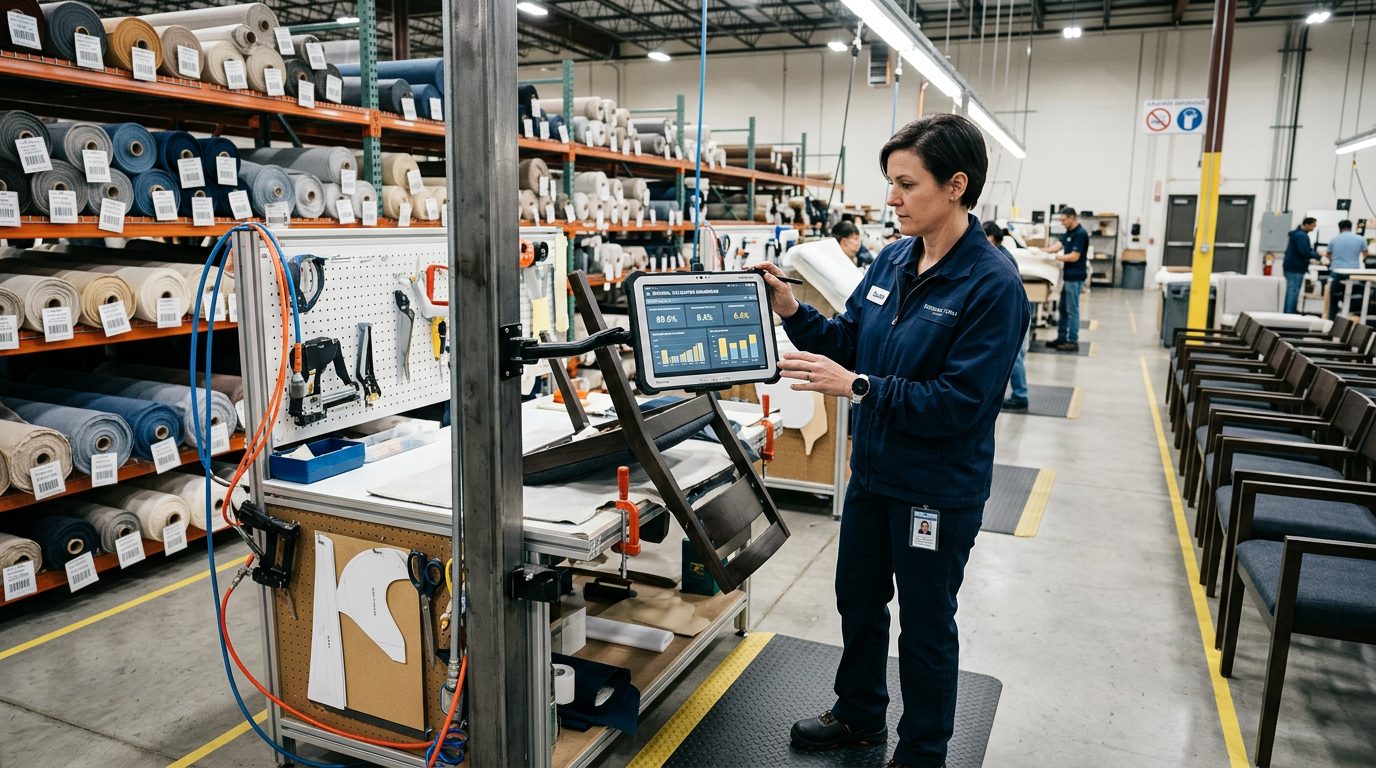
Key Features: Waste and Cost Control Built for Furniture Manufacturing
BOM-Driven Material Requirement Accuracy
Correct yardage with repeat allowances, foam volumes, and hardware counts reduce the hidden tax of over-buying.
Fabric Yield and Utilization Tracking
Planned vs. actual by run highlights styles and grades that need BOM or layout fixes.
Foam and Frame Component Waste Reporting
Consumption vs. BOM by density, thickness, and product family supports purchasing and pricing updates.
Production Department Efficiency Monitoring
Actual hours vs. standard by department exposes staging, tooling, and complexity mismatches.
Rework and Rejection Tracking by Department and Reason
Quantify true rework cost and trend root causes instead of only counting final rejects.
Overhead and Operational Cost Analysis
Machine time, finishing materials, tooling, and overhead attach to jobs for true cost-per-hour views.
Case Studies: Success in Action
Real Results from Furniture Manufacturers Like You
Case Study 1:
Residential Upholstered Manufacturer
Fabric waste above 22% concentrated in a few styles; BOM and layout fixes brought overall fabric waste below about 16%, saving tens of thousands annually at current volumes.
Case Study 1:
Commercial Office Manufacturer
Structured rework tracking showed most final rejects traced to frame QC misses; tightening upstream inspection cut rework rate from about 18% to under 6%
Case Study 3:
Hospitality FF&E Manufacturer
Foam remnant tracking and allocation to smaller components cut annual foam disposal costs by over half and reduced raw foam buys proportionally.
How Waste and Cost Control Connect to Your Seradex Modules
- BOM management - accurate quantities and allowances prevent defensive over-purchasing.
- Inventory - remnants and partial rolls become usable stock when tracked.
- Scheduling - better sequencing cuts non-productive changeover time.
- Job costing - consumption and rework post live to the job.
- Purchasing - replenishment uses real consumption instead of conservative fudge factors.
- Quality - rework codes close the loop from symptom to upstream cause.
Frequently Asked Questions
Answers to common questions to help you better understand our solutions and processes.
How does Seradex measure fabric yield efficiency?
Planned BOM yardage (including repeat rules) vs. actual issued yardage yields efficiency by grade, style, and run.
Can waste be tracked separately for fabric, foam, and frame materials?
Yes. Category-level reporting supports targeted improvement projects.
How does rework tracking work in practice?
Rejections log department, reason, hours, and replacement material; job and management reports roll up trends.
Can foam remnants reduce purchasing?
Yes. Tracked remnants above minimum dimensions can be allocated to smaller components.
Does waste data feed estimating?
Yes. Actual vs. planned consumption should refresh BOM standards and quotes on a disciplined cycle.
Expert Tips for Waste Reduction in Furniture Manufacturing
- Set fabric yield targets by product category and review monthly; measurement alone changes behaviour.
- Audit BOM yardage for pattern repeat - often the fastest five to ten points of yield recovery.
- Code rework by root cause, not only department, so systemic upstream fixes get funded.
- Refresh estimating waste factors at least annually from Seradex consumption reality.

ARE YOU READY?
Ready to Turn Waste Reduction into Measurable Profitability?
Seradex gives furniture manufacturers the data to find waste at the source, measure it consistently, and remove it - converting inefficiency into margin on every job.