
Stop Losing Money to Scheduling Bottlenecks - Automate Your Shop Floor
Manual scheduling in door manufacturing costs you more than time. Missed deadlines, idle work centers, and emergency material runs eat directly into your margins. Seradex Automated Production Scheduling gives your team a real-time, intelligent engine that sequences every cut-list, BOM, and work order against live capacity - so your shop floor runs lean, on time, and profitable.
Why Seradex Customers Switch?
Dynamic scheduling absorbs change orders and material surprises without rebuilding whiteboards, sequences work to reclaim idle capacity (facilities often cite meaningful idle-time reduction), lifts on-time delivery when releases match real constraints (30%+ improvements are frequently reported), and grows throughput without parallel hiring when the same crew runs to an optimized plan.
- Agility: schedule changes propagate automatically instead of across spreadsheets.
- Utilization: better sequencing attacks hidden lost capacity on key assets.
- Customer outcomes: on-time and throughput KPIs move when the plan matches reality.
Key Features Built for Door & Millwork Operations
Real-Time Dynamic Scheduling
Your production schedule updates the moment conditions change - a rush order, a machine going down, or a material shortage flagged at receiving. Cut-lists are re-sequenced automatically across all work centers without manual intervention.
BOM-Driven Job Prioritization
Jobs are prioritized against your live BOM, delivery commitments, and customer tier. Critical commercial door packages never get buried behind lower-margin residential runs.
Work Center & Resource Optimization
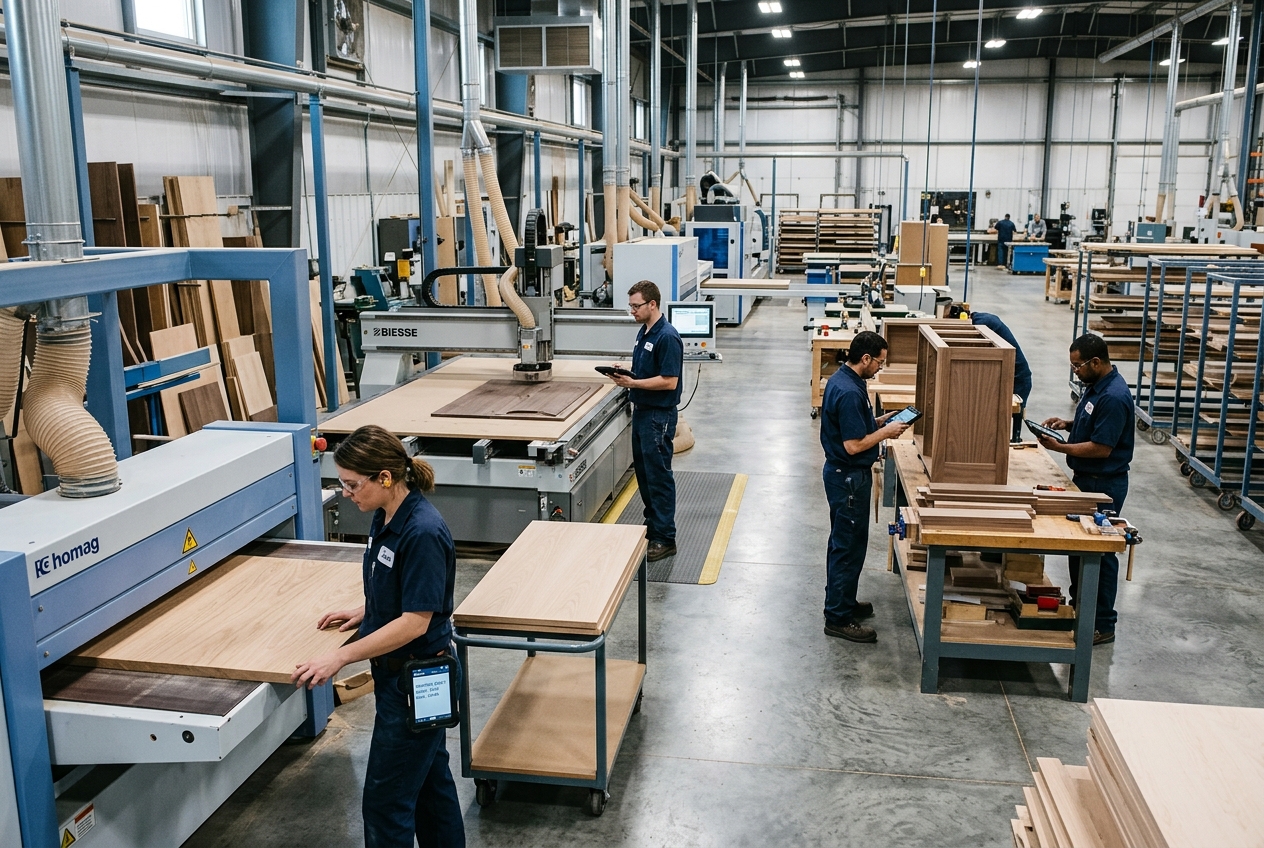
Seradex maps every job to your specific work centers - panel saws, CNC routers, tenoners, finishing booths - balancing labor and machine loads to eliminate idle time and prevent bottlenecks.
Nesting & Material Planning Integration
Scheduling connects directly to your nesting engine and material plans. Before a job is scheduled, Seradex confirms raw stock availability - preventing the costly mid-run stops that come from missing panel stock or hardware.
Multi-Line & Multi-Facility Support
Running separate residential and commercial lines? Multiple plants? Seradex provides a unified scheduling view across every line and location - with the ability to drill into individual work center queues.
Production Analytics & Schedule Adherence
Track on-time completion rates, work center utilization, and bottleneck frequency. Use the data to continuously tighten your scheduling rules and improve throughput.
Case Studies: Success in Action
Real Results from Door Manufacturers Like You
Case Study 1:
25% More Output — Same Headcount
A commercial door manufacturer running manual Excel-based schedules deployed Seradex. Within 90 days, automated job sequencing across their panel saw and CNC work centers increased throughput by 25% and eliminated unplanned overtime.
Case Study 2:
30% Improvement in On-Time Delivery
A residential door producer aligned their production schedules directly to confirmed ship dates. BOM-driven scheduling ensured materials were staged before each job launched - resulting in a 30% improvement in on-time delivery rates and measurably higher customer satisfaction scores.
Case Study 3:
20% Reduction in Work Center Idle Time
A multi-plant millwork operation gained a consolidated scheduling dashboard. By balancing jobs across all work centers in real time, they cut idle time by 20% - without a single new hire or capital investment.
How It Connects to Your Existing Seradex Modules
Automated scheduling doesn't work in isolation. Seradex integrates scheduling tightly with:
- Inventory & Material Planning - confirms stock before scheduling; flags shortages before they stop production
- Order Entry - new orders drop directly into the scheduling queue with all BOM and routing data attached
- Job Costing - labor and machine time tracked against each scheduled job for real-time margin visibility
- Quality & Compliance - quality hold flags automatically remove jobs from the active schedule until cleared
- Performance Analytics - scheduling KPIs feed directly into your executive dashboard
Frequently Asked Questions
Answers to common questions to help you better understand our solutions and processes.
Can the schedule update in real time when a machine goes down?
Yes. Seradex detects capacity changes and automatically re-sequences the queue, routing affected jobs to available work centers or flagging them for planner review.
How does it handle our custom door configurations and multi-level BOMs?
Seradex is built for complex BOM structures. Every schedule is generated from the full BOM, including sub-assemblies, hardware kits, and custom specifications - so nothing falls through the cracks.
Can we prioritize rush orders without disrupting the whole schedule?
Absolutely. Job priority rules are configurable. A rush flag on an order immediately elevates it in the queue, with downstream impact analysis shown before any changes are committed.
Does it work across multiple production lines or plants?
Yes. Seradex supports multi-line, multi-site scheduling with consolidated and drill-down views.
How long does implementation take?
Most door manufacturers are running live schedules within the first implementation phase. Your Seradex consultant works directly from your existing routing and BOM data to configure the engine.
Expert Tips: Getting Maximum ROI from Automated Scheduling
- Map your work centers before go-live. Accurate capacity data for each station - panel saw, router, finishing line - is the foundation of a useful schedule.
- Integrate material planning on day one. The biggest scheduling failures come from jobs launching without confirmed stock. Connect nesting and BOM purchasing from the start.
- Set escalation rules for rush orders. Define what triggers a priority elevation so your schedulers aren't making ad hoc decisions under pressure.
- Review schedule adherence weekly. Use the analytics module to spot recurring bottlenecks before they become chronic throughput killers.
- Audit your BOMs quarterly. Stale BOM data produces inaccurate job time estimates and scheduling conflicts. Keep your data clean.
ARE YOU READY?
Ready to Run a Smarter Shop Floor?
Smart Production Scheduling is more than a planning too - it’s a competitive advantage. By optimizing your workflows, resources, and timelines, you can deliver more, waste less, and improve profitability.