
Stop Running Your Press Floor on Whiteboards. Start Running It on Data.
Every minute of unplanned press downtime costs money. Every makeready that runs long because a job was sequenced wrong costs more. Seradex ERP replaces manual scheduling boards and gut-feel planning with a data-driven scheduling engine built for multi-press operations - Flexo, Litho, Digital, and Silk Screen.
The Value of Sequencing Jobs for Uptime, Not Just Dates
Flexo and Litho assets carry thousands of dollars per hour in fully loaded cost, yet many shops still schedule with whiteboards, spreadsheets, and daily meetings that are obsolete by lunch.
Seradex sequences work using press availability, priority, substrate changeover, colour optimization, and material readiness - and recalculates when reality changes.
Typical outcomes include reduced makeready through intelligent sequencing, higher press utilization by closing schedule gaps, improved on-time delivery from constraint-aware date commitment, and schedule replanning in minutes instead of hours.
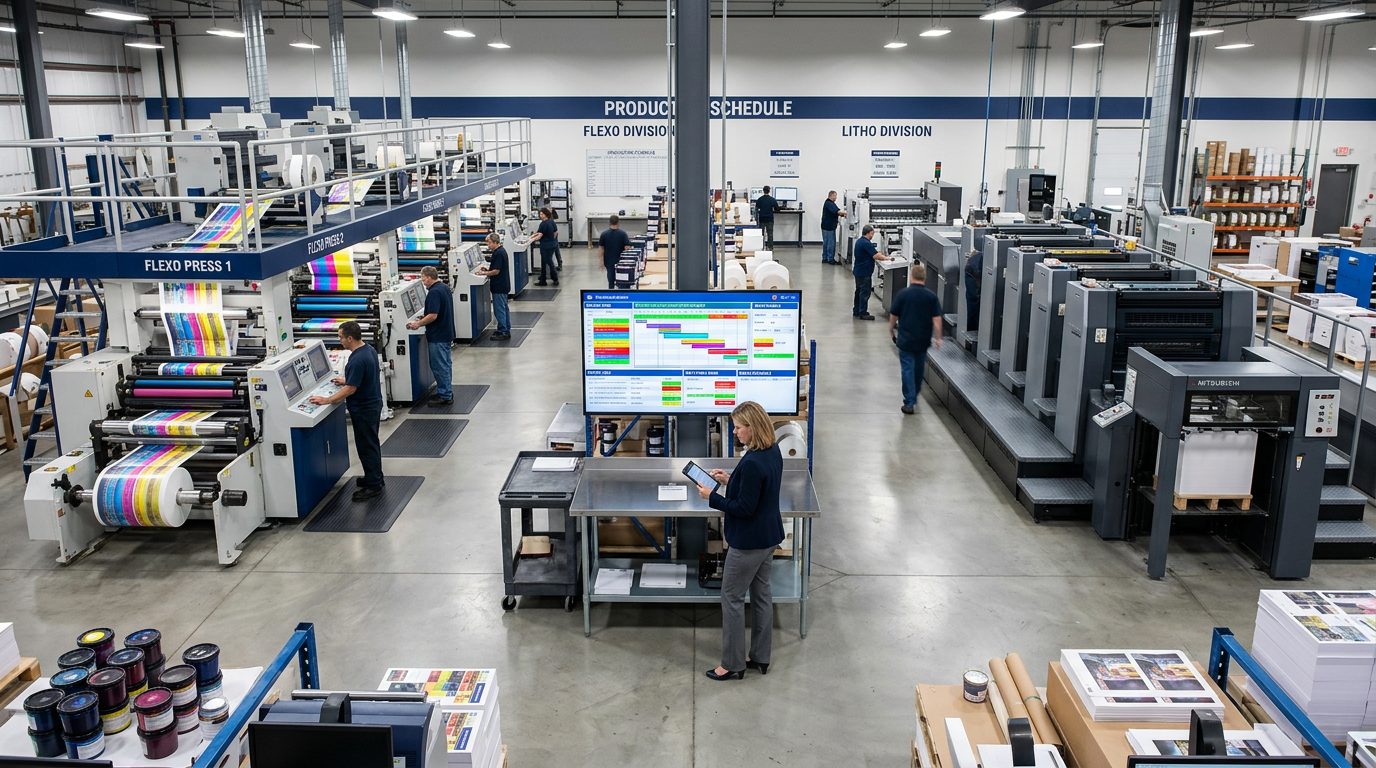
Key Features: Built for Multi-Press Print Scheduling
Our ERP system offers advanced scheduling capabilities designed specifically for cabinet manufacturers:
Intelligent job sequencing
Group by substrate to cut changeover, sequence colours light-to-dark to reduce wash-up, cluster common plate sets; Flexo can group by cylinder repeat to cut sleeve changes; Litho can sequence by grain and sheet size to cut feeder tweaks - more hours producing sellable work, fewer in makeready.
Live production dashboard
Supervisors see every press - running, makeready, maintenance, idle - with queued jobs, expected start and finish, and material readiness; multi-shift handoffs see the next shift's plan without whiteboards or phone tag.
Due date commitment engine
Sales answers "when can I have it?" from current press load, priorities, material availability, and finishing capacity - including Digital rush work beside multi-day Litho.
Constraint-based scheduling
Press availability, priority, substrate changeover, colour sequence, and material availability are evaluated before a job is placed.
Real-time schedule adjustment
Rush jobs and pulled jobs trigger immediate recalculation and show impact across the rest of the schedule.
Capacity and utilization reporting
See load by press across week, month, and quarter to commit delivery dates with evidence and to know when to add capacity.
Flexo cylinder and sleeve scheduling
Group jobs by repeat and sleeve diameter to reduce sleeve change and register setup time.
Colour station optimization
Sequence multi-colour Litho and Flexo to reduce wash-ups and ink waste between jobs.
Maintenance and downtime planning
Place planned maintenance on the calendar and auto-shift the queue so service does not become surprise delay.
Finishing and bindery integration
Extend scheduling past the press to lamination, die-cutting, folding, stitching, and shipping so the chain stays coordinated.
Rush job management
Insert urgent work with automated impact analysis on which jobs move and by how much before you commit.
Production performance reporting
Compare scheduled versus actual time by job, operator, and press to refine benchmarks and costing standards.
Case Studies: Success in Action
Real Results for Printing Operations Like Yours
Case Study 1:
The press that waited on makeready
When sequencing ignores substrate and colour, makeready stretches and sellable hours disappear. Seradex applies the same grouping logic strong operators use - systematically - so the schedule protects uptime.
Case Study 2:
Scheduling KPIs
Shops report shorter makeready from better sequences, higher utilization from fewer idle gaps, on-time gains from capacity-backed promise dates, and faster what-if replans when rush work lands.
Case Study 3:
Rush at 9 AM, pull at 2 PM
The engine recalculates around real events and shows downstream impact immediately so planners commit changes with full visibility.
How this connects to Seradex modules
- Inventory - material readiness gates whether a job can start on time.
- Job tracking - live stage status feeds what is truly ready for the next operation.
- Prepress and plates - plate and file readiness align with press slot timing.
- Finishing - downstream operations stay in the same plan as press completion.
- Reporting - scheduled versus actual feeds continuous improvement on standards.
Frequently Asked Questions
Answers to common questions to help you better understand our solutions and processes.
Does scheduling account for more than press dates?
Yes. Constraints include press availability, materials, colour and substrate change logic, and downstream finishing where configured.
Can the schedule react to same-day changes?
Yes. Rush insertions and cancellations trigger recalculation with visible impact on other jobs.
How do we promise customer delivery dates?
The due date engine uses load, materials, and finishing capacity so committed dates are backed by current reality.
Can maintenance be planned without surprise disruption?
Yes. Maintenance windows sit on the calendar and the queue adjusts around them.
Is performance tracked after the fact?
Yes. Scheduled versus actual comparisons are available by job, operator, and press.
Expert Tips for Production Managers
- Keep substrate and colour sequencing rules current so the optimizer matches how your crews actually run changeovers.
- Gate starts on material and plate readiness so the board does not show fiction that the floor cannot execute.
- Model rush inserts before accepting so customer conversations include real slip impacts.
- Review scheduled versus actual weekly to tighten make-ready standards and costing inputs.
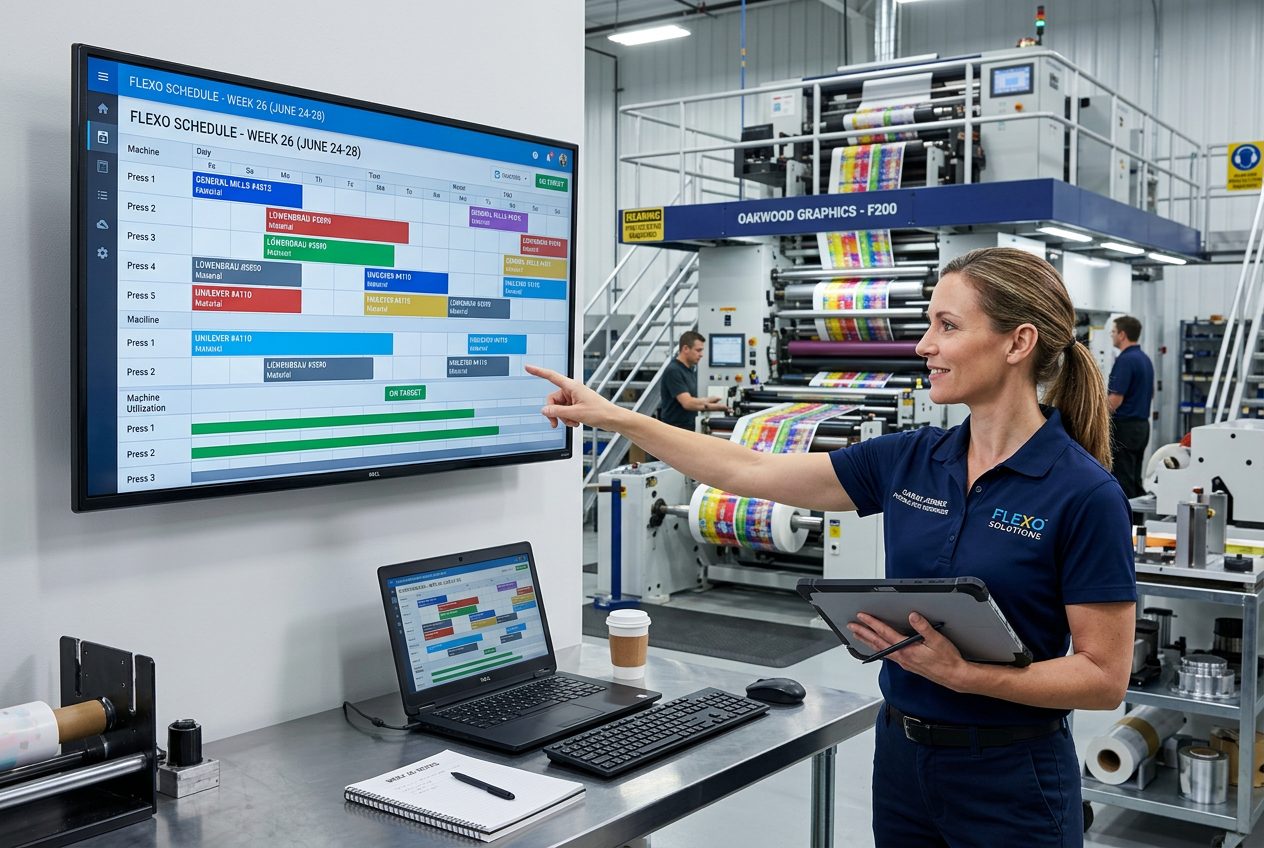
ARE YOU READY?
Get More From Every Hour Your Presses Run
Seradex ERP gives your production team the tools to schedule smarter, react faster, and deliver on time - every time. Book a demo and see what intelligent press scheduling looks like for your operation.