
The Hotel's Opening Date Doesn't Move. Your Production Schedule Has To.
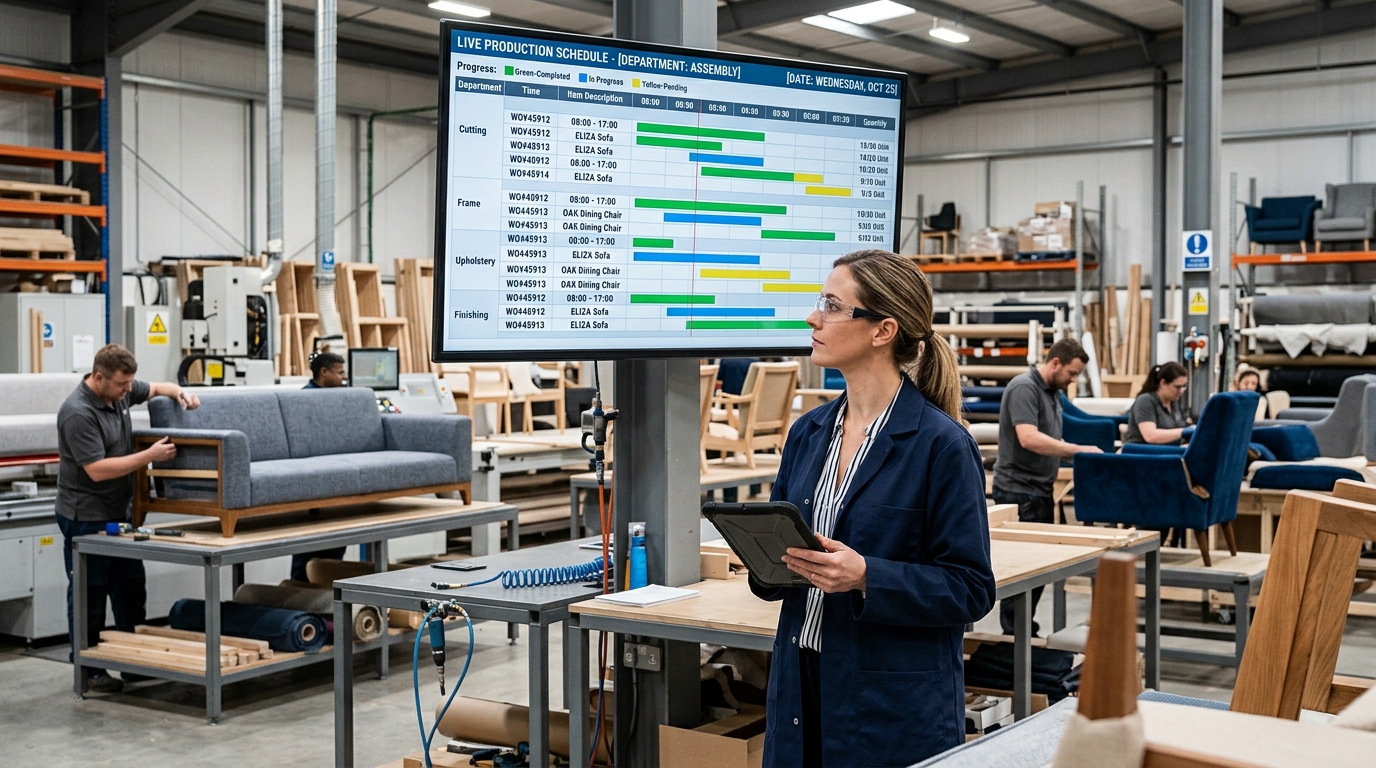
Frame, upholstery, and finishing each have real ceilings - headcount, curing time, and product mix. When the schedule lives on a whiteboard, one rush job, late fabric, or reject cascades the week. Seradex Optimized Manufacturing Scheduling is capacity-aware and material-validated so priorities can change without silently breaking every other promise.
What Optimized Scheduling Delivers?
Optimized scheduling in Seradex often reduces production lead times by on the order of 25% when department sequencing and material-validated release cut idle gaps and mid-run stops. Upholstery and finishing utilization frequently rises by roughly 20% once jobs arrive staged with prior operations complete and fabric on hand. Dynamic re-prioritization lets you insert rush hospitality or key-account work while still seeing the impact on committed production - so trade-offs are explicit instead of accidental.
Key Features: Scheduling Built for the Reality of Furniture Manufacturing
Department Capacity-Aware Scheduling
Throughput limits per shift and asset prevent overbooking frame, upholstery, finishing, and QC.
Material-Validated Job Release
Fabric, foam, hardware, and frame must be available or on confirmed PO before the floor sees the job.
Dynamic Priority Management for Rush and Key Accounts
Re-prioritize with immediate visibility of affected work and dates.
Production Stage Sequencing Optimization
Batching and grouping reduce changeover and idle gaps between runs.
Real-Time Production Progress Tracking
Stage completions refresh the plan so slippage surfaces before delivery lock.
Delivery Commitment Alert Management
Projected misses alert the planner with enough runway to expedite, communicate, or re-sequence deliberately.
Case Studies: Success in Action
Real-world results showcasing how our solutions drive efficiency, growth, and measurable impact.
Case Study 1:
Residential Custom Manufacturer
Upholstery ran well below capacity due to staging and prior-stage gaps; material-validated release and capacity-aware scheduling raised utilization into the mid-80% range and effective capacity by over 25% without new hires or equipment.
Case Study 2:
Commercial Office ManufacturerMissed deliveries on about 22% of jobs from undetected frame-vs-upholstery conflicts fell under 4% in one quarter after capacity scheduling.
Case Study 3:
Hospitality FF&E Manufacturer
Dynamic reprioritization for accelerated hotel requests cut overtime about 30% while protecting other committed contracts.
How Optimized Scheduling Connects to Your Seradex Modules
- BOM and material planning - each scheduled job carries full multi-material requirements and routing.
- Inventory - availability checks against committed stock before release.
- Purchasing - shortfalls surface as requisitions before they become emergencies.
- Production management - shifts, teams, and skills inform feasible loading.
- Job costing - hours from the floor post continuously to the job.
- Delivery and logistics - completion milestones feed shipping and client updates.
Frequently Asked Questions
Answers to common questions to help you better understand our solutions and processes.
Can Seradex schedule across multiple shifts in upholstery and finishing?
Yes. Capacity can be defined by shift and department, including mixed shift patterns.
How is a rush hotel job handled when the schedule is full?
Conflict detection shows impacted orders and dates so you can choose overtime, client communication, or re-sequence with full context.
Can scheduling respect operator skill for complex upholstery?
Yes. Skill-based assignment is supported within departments.
How are subcontracted finishing or metalwork stages handled?
External stages carry lead times and commitments; POs to subcontractors can generate from scheduling rules.
Can supervisors update status from the floor?
Yes. Floor interfaces keep the master plan current without planner-only bottlenecks.
Expert Tips for Production Scheduling in Furniture Manufacturing
- Never release without fabric and foam confirmed on hand or inbound - the highest-payoff discipline in furniture scheduling.
- Batch upholstery by fabric grade when possible to protect sewing and cutting rhythm.
- Keep a modest finishing buffer; scheduling finishing to 100% of nominal capacity leaves no room for rework or rush inserts.
- Review delivery-risk alerts every morning; three days of warning beats one day of excuses.

ARE YOU READY?
Ready to Run Your Furniture Operation at Full Capacity - Without the Scheduling Chaos?
Seradex Optimized Manufacturing Scheduling helps furniture manufacturers plan with confidence, execute with precision, and deliver on time across residential, commercial, hospitality, and institutional work.